Be careful when accepting pass-along plants from other gardeners. They could be garden thugs that get out of control.
Back when I was a beginning gardener, I purposely sought out those plants that carried warning labels. These were the plant with catalog descriptions and label that used terms like “can be invasive,” “spreads rapidly,” “vigorous reseeder,” and “multiplies readily.”
After all, I had a big back yard and a small budget. I wanted to fill my landscape with tall vines, sprawling groundcovers, and fast-growing perennials and annuals that would quickly overflow every nook and corner.
Along the way, I figured out that any plant a local is trying to give away often is, logically, a plant that does so well that its owner has lots to share (or is trying to get rid of). Score!
A number of common garden plants can be invasive, given good conditions. Plant the following with caution. They tend to be aggressive in most Iowa gardens.
Alba rose
Artemesia, some types
Bishops-weed
Blackberry lilies
Callery or Bradford pear
Chives
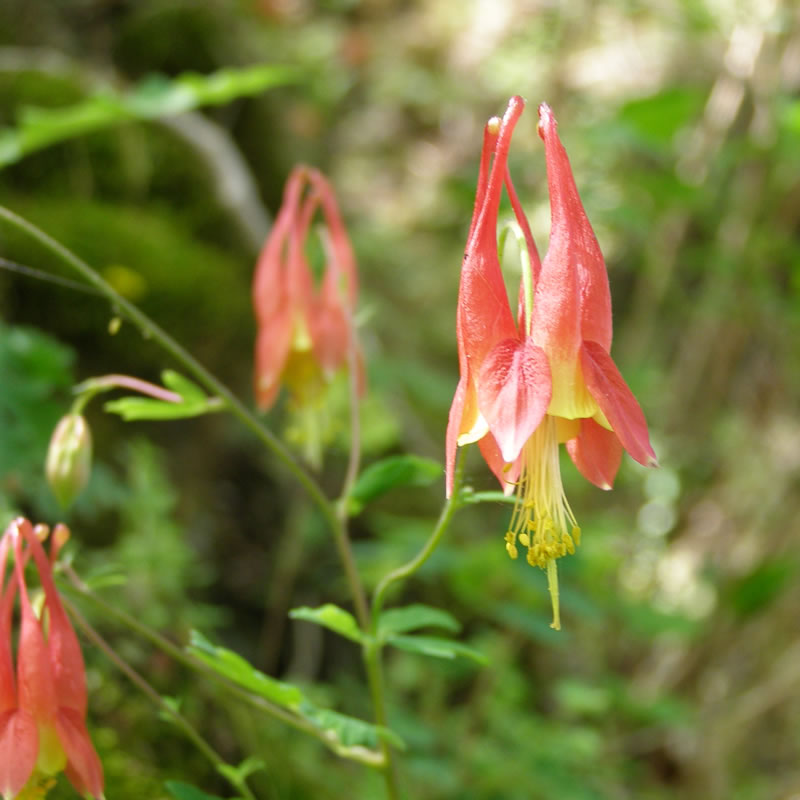
Columbine
Creeping jenny
Creeping periwinkle
“Ditch” daylilies, the orange type with smaller flowers
Globe bellflower
Gooseneck loosestrife
Honeysuckle
Johnny jump-up
Japanese barberry
Lily-of-the-valley
Mint
Missouri primrose
Morning glory, heirloom types (not ‘Heavenly Blue’)
Oregano
Ostrich ferns
Ox-eye daisies
Pampas grass
Purple coneflower
Purple loosestrife
Trumpet vine
Yellow loosestrife
Zebrina hollyhock mallow
I still have many of those in my garden. With others, I figured they were more hassle to keep under control than they were worth. But I learned some important things along the way.
- What is invasive in one person’s garden may not be invasive in another person’s garden. A fellow gardener was complaining about lamb’s ear being invasive in his garden. I keep replanting it in mine because I love it and it doesn’t establish well.
- Something that is invasive one year may not be the next year. My sweet little johnny-jump-up violas were reseeding themselves all over the place. Then one year they never came back.
- Some plants are easy to control; some are not. I don’t mind my heavily reseeding sweet autumn clematis because it’s easy to yank out reseeders and they never come back. Not true with pampas grass. One little bit of the vigorous underground runners gets left in the soil and it sprouts back up again.
- Some plants are worth the invasiveness, as long as you monitor them. I love mint and use it all summer long. But I found a place that has sidewalk on one side and driveway on another so I can keep it carefully in check.
- Some plants are so invasive that they threaten the environment and are irresponsible or even illegal to grow. The very worst are classified as noxious weeds and there is an actual state law that requires landowners to control them and also gives government authority to kill them. Details here.
For more lists of invasive plants in Iowa, check out the Iowa Department of Natural Resources forest invasive species list and its invasive water plants species.